Ambassadors of Islam 
And those who strive hard for Us, We will most certainly guide them in Our ways; and Allah is most surely with the doers of good. 29:69 The Quran

Pakistan Imposes Curfew in
Parts of Karachi
Syed Javed Hussain
The curfew is effective from Sunday 16 January, 2011 and will continue until further order.
Karachi is the biggest city of Pakistan and is considered mini-Pakistan. It is the financial hub of the country and crippling Karachi means paralyzing Pakistan. The federal interior minister talking to media said the measure was taken to control the deteriorating law-and-orde in the city.
The law-and-order situation fast deteriorated last Saturday 15 January, 2011 when terrorists killed five people, including Badshah Khan, Member of the Mutahidda Qaumi Movement.

Pillion Riding in Karachi Banned
According to media reports the government has also imposed a fresh ban on pillion riding in the city with effect from Sunday 16 January, 2011. Pillion riding ban in Karachi is a regular feature of the government's measures to bring order to the city as it has been found that most terrorists use motorcycles to commit the crime. Motorcycles help them easily disappear in the city’s small lanes or maneuver well in the city’s thick traffic after committing the crime.
A corollary of current wave of terrorism was the murder of Wali Khan Babar, a Geo TV reporter, on 13 January, 2011. He was returning from his office after a day reporting on a gunfight in Pehlwan Goath, a notoriously dangerous area in the city.
Violence Emerges in the Wake of Political Chaos Caused by JUI
Wali Khan's murder was condemned by all leaders across the board and demands were made for some concrete and appropriate measures to stem the tide of violence that had surfaced only recently in the wake of political chaos cause by an Islamist party, Jamiat Ulma-e Islam.
The JUI left the coalition on 14 December, 2011 when Prime Minister of Pakistan, Syed Yusuf Raza Gillani, had sacked two ministers, one belonging to the JUI, over Hajj corruption scandal. The JUI minister had created a lot of fuss in the media over the issue and had blamed the minister of religious affairs, Syed Hamid Raza Kazmi, for corruption. The corruption case is now sub judice before the Supreme Court of Pakistan.
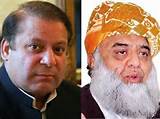
Most people in Pakistan blame Maulana Fazul Rehman, chief of JUI for plunging the country into yet another crisis by not politically behaving responsibly. So far he has shunned the government's reconciliatory offers.
Religious Parties are Exploiting Religion for Political Gains
Currently, religious parties in Pakistan are protesting against the government; bringing out long processions in all major cities of country and demanding the government refrain from repealing or amending the blasphemy law of the Pakistan Penal Code.
Despite categorical assurances of the government for having no appetite to repeal or amend the law, religious parties don't want to part with their rallying point and want to continue with their exploitation of religion for political gains.
An uncertain political situation, rioting, targeted killings, political wrangling and economic downturn have already wrecked the country’s institutions and aggravated the law and order situation. Non cooperation on the part of religious parties exposes their immaturity as well as the hidden agenda of certain extremist elements among them that runs counter to mainstream politics of the country.

Father of the nation, Quaid e Azam, Mohammad Ali Jinnah

Jubiliant face of Pakistan

Saqib Akbar, a rising scholar of Pakistan

Hafiz Jalandhari, the famous poet and the writer of Pakistan anthem
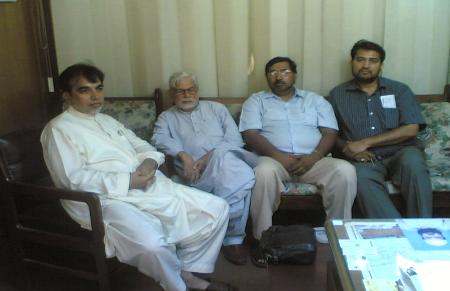
With Prof Ejaz Hussain Naqvi